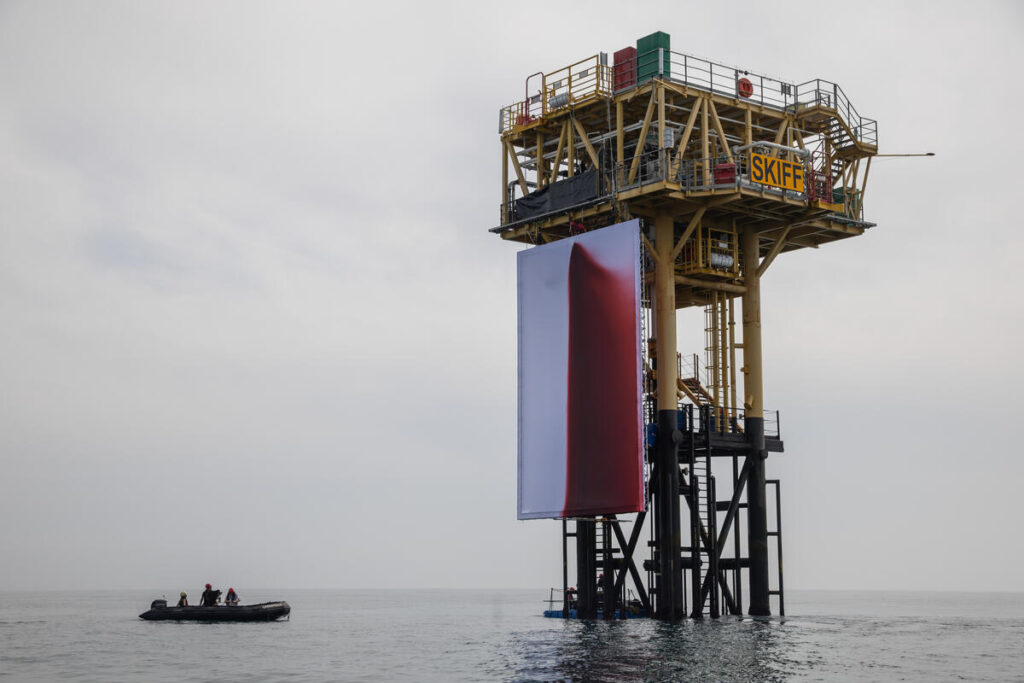

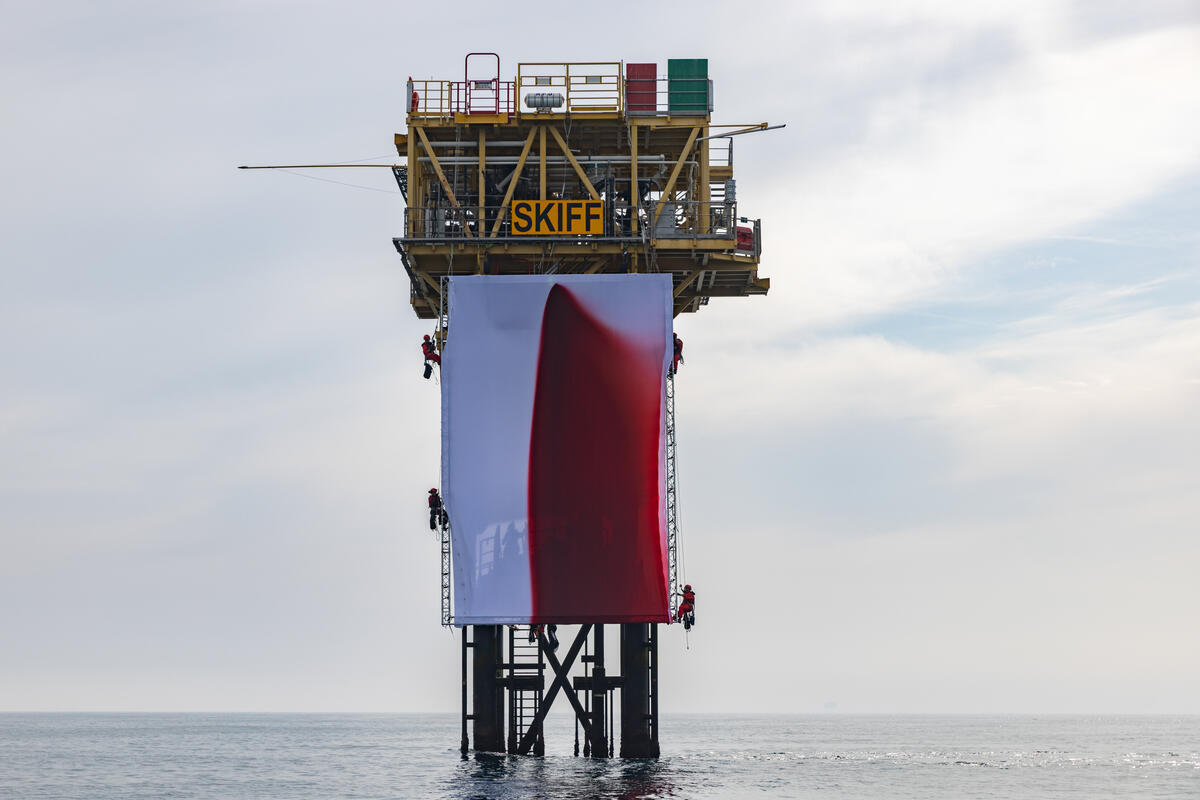
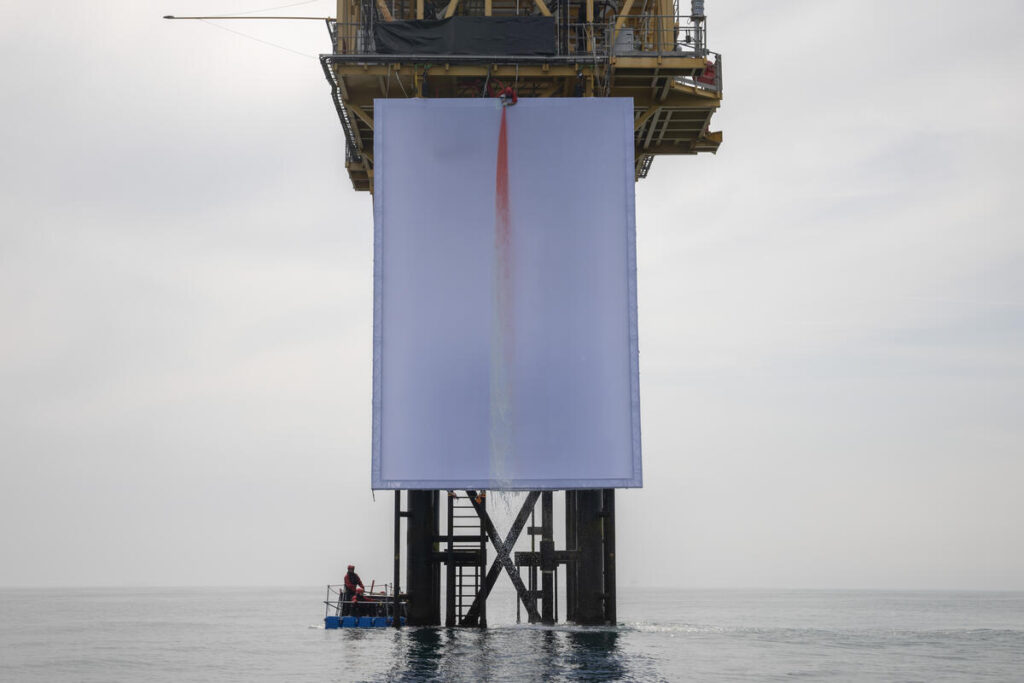
Greenpeace climbers install a major new work by renowned artist Anish Kapoor titled BUTCHERED onto a Shell platform in the North Sea - the world’s first artwork to be installed at an active offshore gas site.
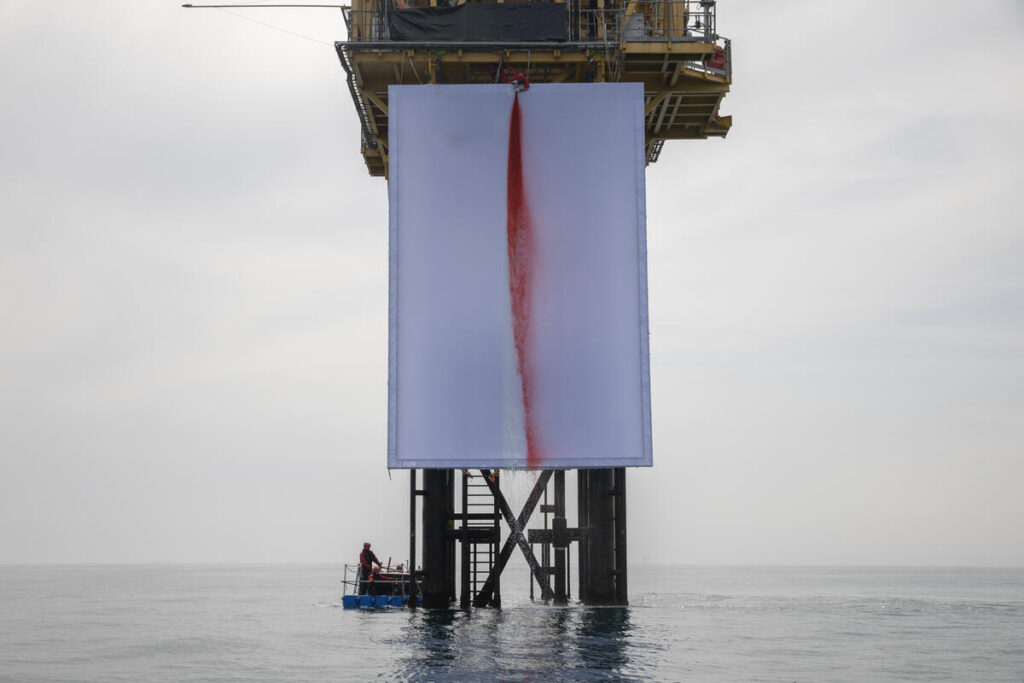
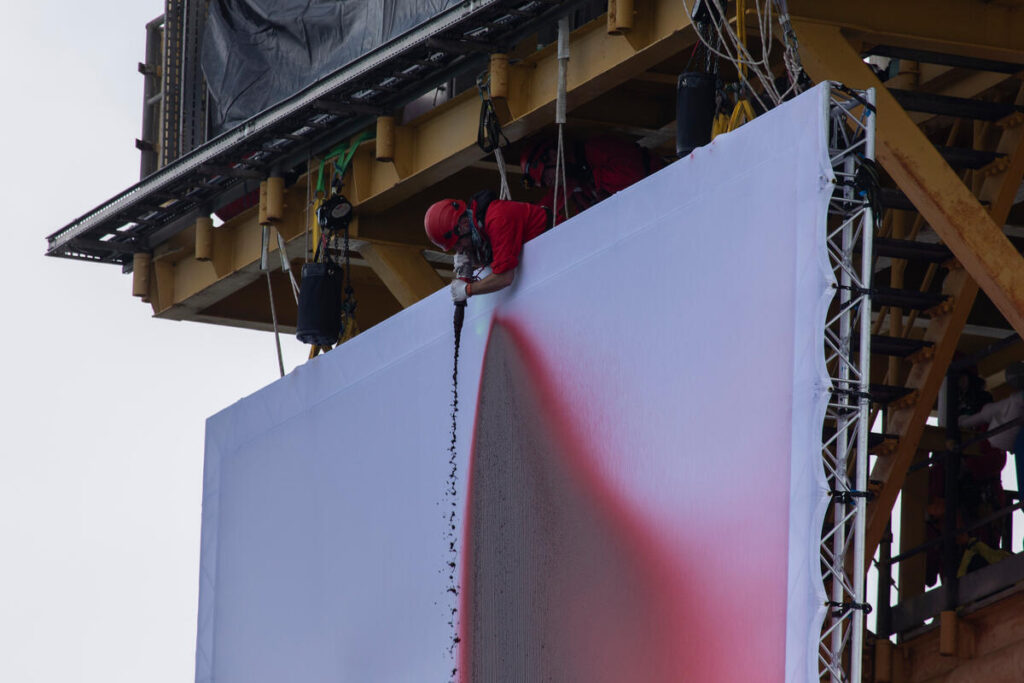
After securing a giant 12m x 8m canvas to one side of the structure, the activists hoisted a high-pressure hose on top of the canvas at a height of 16 metres above the sea. They then pumped 1,000 litres of blood-red liquid that gushed into the fabric, creating a vast crimson stain.
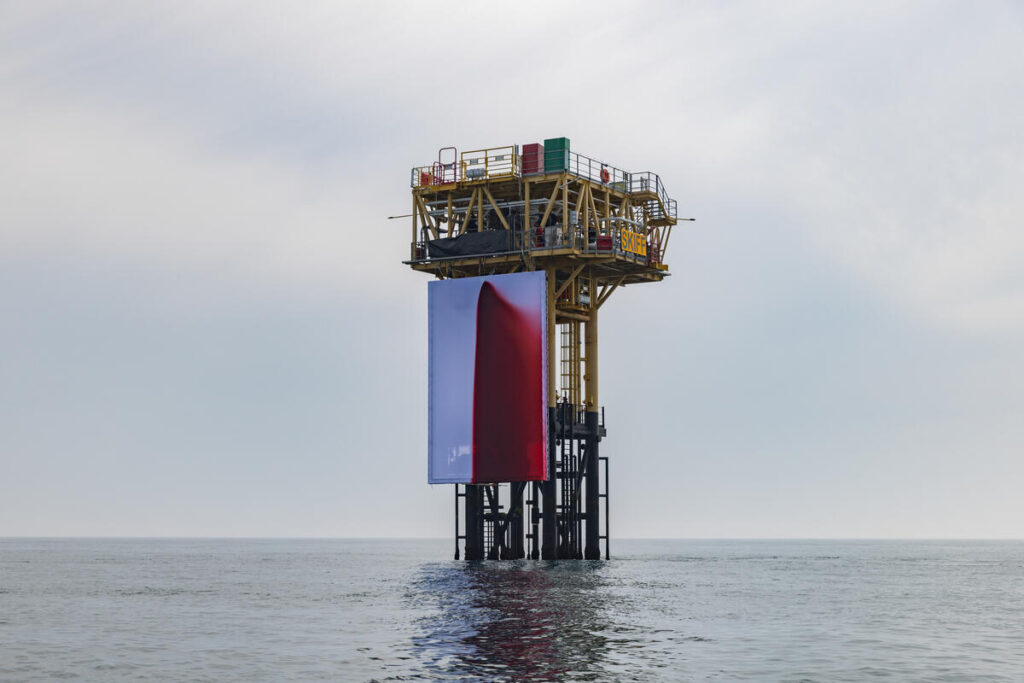
The work is a stark visualisation of the wound inflicted on both humanity and the Earth by the fossil fuel industry, evocative of our collective grief and pain at what has been lost, but also a cry for reparation.
In un gesto senza precedenti che unisce arte, attivismo e denuncia ambientale, il celebre artista Anish Kapoor ha realizzato un’opera inedita nel cuore di uno dei simboli più controversi della crisi climatica: una piattaforma offshore della compagnia petrolifera Shell. L’installazione, intitolata BUTCHERED, è stata allestita da un gruppo di attivisti e attiviste di Greenpeace sulla piattaforma “Skiff”, un impianto di estrazione di gas situato nel Mare del Nord, a circa 45 miglia nautiche dalla costa inglese del Norfolk. Una vera e propria opera monumentale contro i crimini climatici dell’industria fossile.
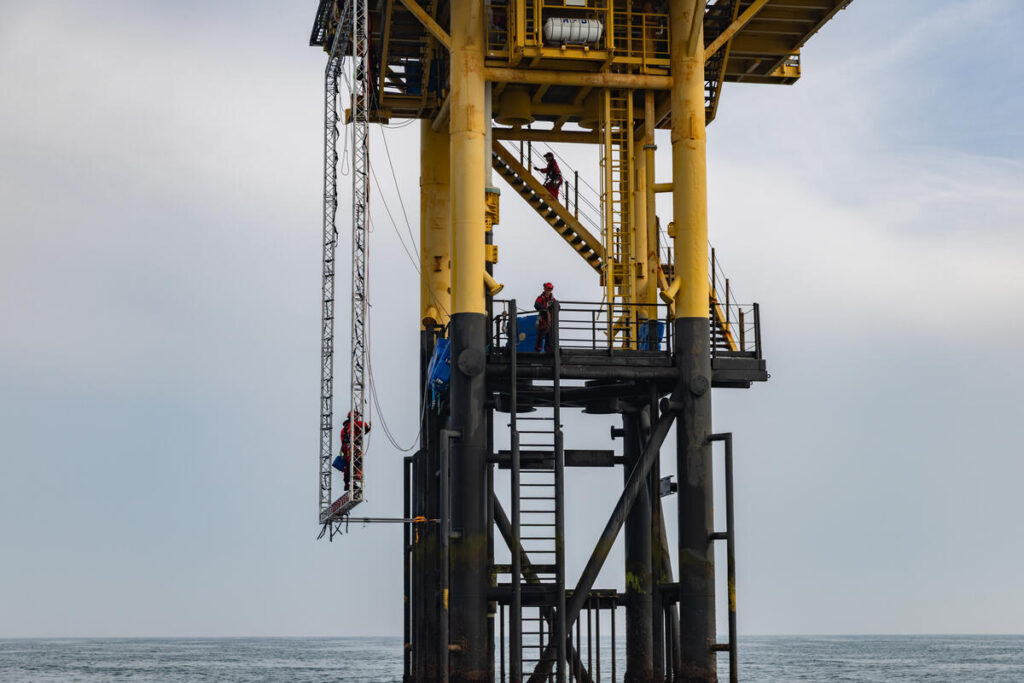
È la prima volta nella storia che un’opera d’arte viene creata su una struttura industriale di questo tipo, ancora pienamente operativa. Il progetto, altamente simbolico, è stato portato a termine grazie all’intervento di sette esperti climber ambientali, che hanno raggiunto e scalato la piattaforma in condizioni di massima sicurezza. Sulla struttura, gli attivisti hanno fissato una tela di 96 metri quadrati, su cui è stato versato da un tubo ad alta pressione un liquido rosso intenso, una miscela a base di acqua marina, barbabietola e coloranti alimentari biodegradabili. L’effetto è quello di una gigantesca ferita rosso sangue che cola sull’acciaio industriale: una metafora visiva della devastazione causata dall’industria fossile sul pianeta e sulle sue comunità più vulnerabili.
Greenpeace climbers install a major new work by renowned artist Anish Kapoor titled BUTCHERED onto a Shell platform in the North Sea – the world’s first artwork to be installed at an active offshore gas site.
After securing a giant 12m x 8m canvas to one side of the structure, the activists hoisted a high-pressure hose on top of the canvas at a height of 16 metres above the sea. They then pumped 1,000 litres of blood-red liquid that gushed into the fabric, creating a vast crimson stain.
The work is a stark visualisation of the wound inflicted on both humanity and the Earth by the fossil fuel industry, evocative of our collective grief and pain at what has been lost, but also a cry for reparation.Greenpeace climbers install a major new work by renowned artist Anish Kapoor titled BUTCHERED onto a Shell platform in the North Sea – the world’s first artwork to be installed at an active offshore gas site.
After securing a giant 12m x 8m canvas to one side of the structure, the activists hoisted a high-pressure hose on top of the canvas at a height of 16 metres above the sea. They then pumped 1,000 litres of blood-red liquid that gushed into the fabric, creating a vast crimson stain.
The work is a stark visualisation of the wound inflicted on both humanity and the Earth by the fossil fuel industry, evocative of our collective grief and pain at what has been lost, but also a cry for reparation.
“L’anidride carbonica è invisibile, ma la devastazione che provoca è ovunque. Quello che resta nascosto, invece, è la responsabilità dei giganti del petrolio come Shell”, ha dichiarato Anish Kapoor. “Con BUTCHERED volevo creare qualcosa di fisico e viscerale: un urlo visibile che rappresentasse il costo disastroso della crisi climatica.”
L’installazione arriva in un’estate segnata da eventi estremi: ondate di calore record in Europa meridionale, incendi in Spagna, raccolti compromessi dalla siccità nel Regno Unito, alluvioni in India e Cina. Kapoor risponde con un linguaggio artistico potente, intriso di dolore e denuncia, ma anche di un appello alla giustizia climatica.
Un’azione politica e poetica
“L’opera nasce nel luogo stesso in cui la violazione ha inizio”, prosegue Kapoor, sottolineando come l’arte possa — e debba — penetrare anche negli spazi più remoti e inaccessibili della crisi globale. La piattaforma diventa così non solo simbolo della devastazione, ma palcoscenico di una resistenza creativa. L’azione di Greenpeace si inserisce in una lunga battaglia contro le grandi compagnie fossili. Shell, in particolare, è nel mirino degli attivisti per i suoi profitti record — 54 miliardi di sterline solo dopo l’invasione dell’Ucraina — e per i danni climatici stimati in oltre 1,4 trilioni di dollari, secondo uno studio pubblicato su Nature. Nonostante gli allarmi della comunità scientifica, l’azienda ha in programma oltre 700 nuovi progetti di esplorazione e produzione di petrolio e gas
Greenpeace climbers install a major new work by renowned artist Anish Kapoor titled BUTCHERED onto a Shell platform in the North Sea – the world’s first artwork to be installed at an active offshore gas site.
After securing a giant 12m x 8m canvas to one side of the structure, the activists hoisted a high-pressure hose on top of the canvas at a height of 16 metres above the sea. They then pumped 1,000 litres of blood-red liquid that gushed into the fabric, creating a vast crimson stain.
The work is a stark visualisation of the wound inflicted on both humanity and the Earth by the fossil fuel industry, evocative of our collective grief and pain at what has been lost, but also a cry for reparation.Greenpeace climbers install a major new work by renowned artist Anish Kapoor titled BUTCHERED onto a Shell platform in the North Sea – the world’s first artwork to be installed at an active offshore gas site.
After securing a giant 12m x 8m canvas to one side of the structure, the activists hoisted a high-pressure hose on top of the canvas at a height of 16 metres above the sea. They then pumped 1,000 litres of blood-red liquid that gushed into the fabric, creating a vast crimson stain.
The work is a stark visualisation of the wound inflicted on both humanity and the Earth by the fossil fuel industry, evocative of our collective grief and pain at what has been lost, but also a cry for reparation.
“Mentre le aziende fossili fanno miliardi, le persone affrontano inondazioni, incendi e siccità. È ora che i governi chiamino Shell e simili a rispondere del danno che stanno infliggendo”, ha commentato Philip Evans di Greenpeace UK.
Kapoor, l’arte e l’etica della disobbedienza
Non è la prima volta che Anish Kapoor prende posizione contro il sistema fossile. Già nel 2019 si era unito alla campagna per interrompere i finanziamenti da parte della compagnia BP alla National Portrait Gallery di Londra. Più recentemente ha aderito al Polluters Pay Pact, l’iniziativa di Greenpeace che chiede di far pagare ai grandi inquinatori i costi della crisi climatica. Con BUTCHERED, Kapoor non solo rinnova il proprio impegno, ma lo amplifica in un gesto radicale che unisce arte, etica e azione diretta. L’opera è insieme installazione, performance e manifesto politico, capace di sollevare interrogativi profondi su responsabilità, memoria e futuro.
Greenpeace climbers install a major new work by renowned artist Anish Kapoor titled BUTCHERED onto a Shell platform in the North Sea – the world’s first artwork to be installed at an active offshore gas site.
After securing a giant 12m x 8m canvas to one side of the structure, the activists hoisted a high-pressure hose on top of the canvas at a height of 16 metres above the sea. They then pumped 1,000 litres of blood-red liquid that gushed into the fabric, creating a vast crimson stain.
The work is a stark visualisation of the wound inflicted on both humanity and the Earth by the fossil fuel industry, evocative of our collective grief and pain at what has been lost, but also a cry for reparation.Greenpeace climbers install a major new work by renowned artist Anish Kapoor titled BUTCHERED onto a Shell platform in the North Sea – the world’s first artwork to be installed at an active offshore gas site. After securing a giant 12m x 8m canvas to one side of the structure, the activists hoisted a high-pressure hose on top of the canvas at a height of 16 metres above the sea. They then pumped 1,000 litres of blood-red liquid that gushed into the fabric, creating a vast crimson stain. The work is a stark visualisation of the wound inflicted on both humanity and the Earth by the fossil fuel industry, evocative of our collective grief and pain at what has been lost, but also a cry for reparation.